Windows Server Patch Management
Keep supported Windows servers up to date while controlling when updates reach production. Action1 identifies missing patches, automates approved deployments on your schedule, and shows which servers still need attention – all from a single cloud console without an on-premises server or VPN.
Status: Active
Coverage: Windows Server 2016, 2019, 2022, and 2025. Check supported editions and older Windows Server versions.
Availability: Global
New to Action1? See this capability in action!
Missed Windows Server updates prolong exposure
Approving a security update does not reduce exposure until it reaches affected Windows servers and any required reboot is complete. Reboots can interrupt services, while failed deployments or offline servers leave updates pending. IT teams need to coordinate maintenance windows and see which endpoints are patched, which need a restart, and which still need follow-up.
How Action1 Windows Server patching works
Action1 brings missing updates, deployment controls, and installation results into one cloud-based workflow. IT teams can automate routine patching while controlling when updates reach production and seeing which Windows servers still need attention.
Discover
See which Windows Server updates are missing and which servers need them.
Prioritize
Review update severity, related vulnerabilities, and remediation deadlines to decide what to address first.
Deploy
Apply approval rules, choose server groups, and install updates immediately or on a schedule. Use update rings and reboot settings to control production rollouts.
Verify
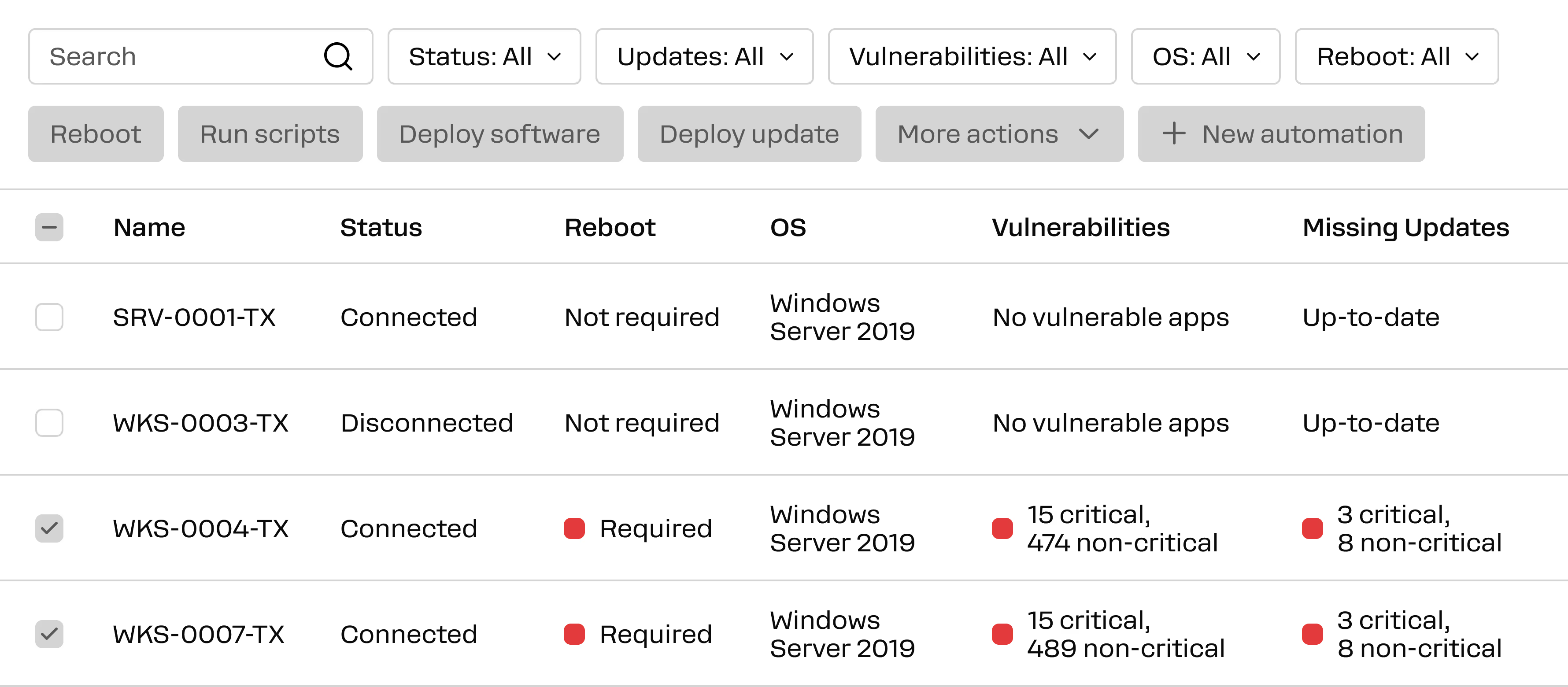
See which installations succeeded, failed, or remain pending, including servers awaiting a reboot. Use deployment records to investigate and follow up.
Enterprise Windows Server patching use cases
Action1 helps IT teams keep Windows servers current without manually coordinating every patch cycle. Automated policies and staged rollouts give administrators control over production changes, while installation results show which servers still need attention.
Risk-based patch prioritization
See which missing Windows Server updates address high-severity vulnerabilities or vulnerabilities known to be exploited. Use that information to decide which patches to deploy first.
Visibility into Windows Server updates
See which Windows updates are missing and which servers still need them, without checking each server individually.
Approval and deployment policies
Set rules to approve or decline updates, target server groups, and schedule routine patch installation. Use manual approval for updates that need closer review.
Immediate deployment of selected updates
Deploy approved updates to selected Windows servers without waiting for the next scheduled patch run.
Ring-based patch rollouts
Install updates on pilot servers first. Action1 update rings can advance patches to larger groups when its deployment meets defined success criteria.
Maintenance windows and reboot controls
Schedule installation within a maintenance window and configure reboot behavior. Plan patching around the applications and services running on each server group.
Patch deployment after reconnection
If a server is offline during a scheduled deployment, Action1 can retry when it reconnects within the configured retry window.
Audit-ready patch evidence
Track successful, failed, and pending installations. Use Windows Update History and Reboot Required reports to investigate errors and gaps, and document patching activity for audits.