
Modernizing Patch Management: A Practical Guide to Moving from SCCM to Action1
Moving from SCCM to Action1
Many IT teams didn’t decide to replace SCCM overnight. The pressure built gradually — remote devices missing updates, third-party apps falling behind, infrastructure requiring constant maintenance.
SCCM was designed for a perimeter-based world. Hybrid work changed the rules.
This practical guide explains why organizations are modernizing patch management — and how to transition from SCCM to Action1 without disruption.
Key Insights
-
VPN dependence slows patching. Remote endpoints often miss updates when connectivity is inconsistent.
-
Infrastructure adds ongoing overhead. SQL, WSUS, distribution points, and maintenance increase operational load.
-
Third-party patching is complex. Manual packaging and custom workflows leave exposure gaps.
-
WSUS deprecation creates risk. Sync failures and reporting inconsistencies directly impact compliance.
-
Cloud-native patching shortens cycles. Direct-to-endpoint connectivity improves speed and visibility.
-
Migration can run in parallel. Validate results before fully retiring SCCM patching.
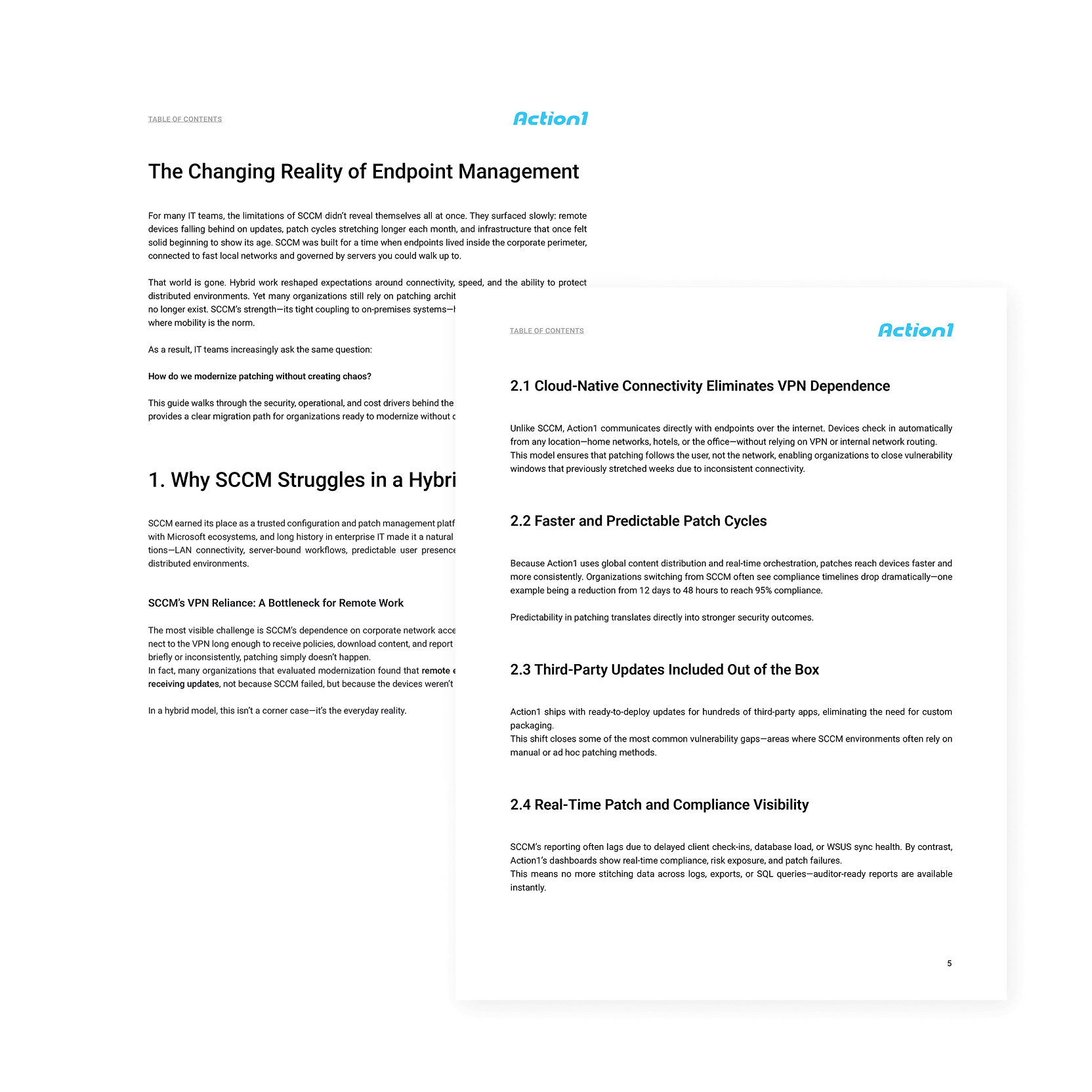
Get the full guide:
Modernizing Patch Management: A Practical Guide to Moving from SCCM to Action1